Noma, a deadly, rapidly progressing, non-contagious infection that destroys the soft tissues and bones of the mouth and face, remains one of the world’s most neglected diseases. With a mortality rate of 80 to 90% if left untreated, the disease mainly affects young children living in extreme poverty and was only added to the World Health Organization’s list of neglected tropical diseases in 2023.
A collaborative international research team led by the Faculty of Dentistry of the University of Hong Kong (HKU) has now produced the most detailed mapping of noma incidence risk in Nigeria, uncovering previously unrecognised high-risk areas and providing an important new tool to support prevention and early detection efforts. This landmark study was published in The Lancet Global Health.
The research was led by Professor John Adeoye, Assistant Professor in Digital and Precision Dentistry from the Division of Applied Oral Sciences and Community Dental Care at the HKU Faculty of Dentistry. The collaborative team included researchers from Usmanu Danfodiyo University, the Cleft and Facial Deformity Foundation, Federal Medical Centre Kebbi, Noma Children’s Hospital, Obafemi Awolowo University, Bayero University Kano, and the University of Iowa.
Noma most commonly affects children between two and six years old. It often begins as a sore on the gums and can rapidly progress to facial swelling, tissue destruction, and death. Among survivors, the disease frequently results in severe facial disfigurement, stigma, and a significantly reduced quality of life. Although noma was historically reported worldwide, it is now largely associated with impoverished communities, particularly in sub-Saharan Africa. Nigeria is believed to bear one of the highest burdens of the disease globally, yet its geographical distribution, especially at the level of small areas and local communities, has remained poorly understood.
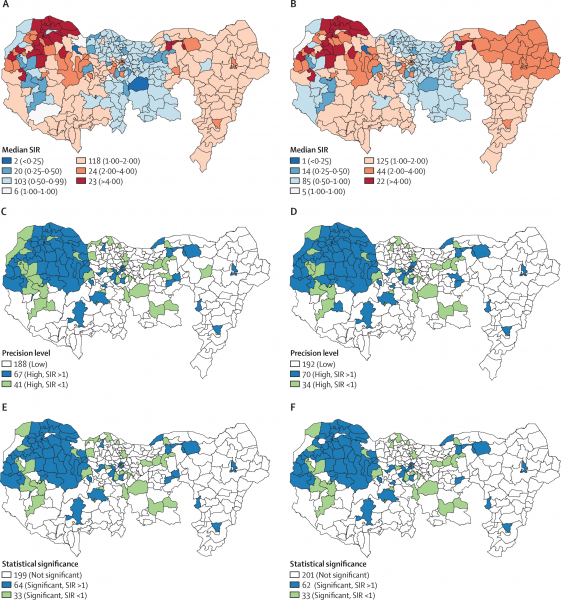
To address this gap, the research team analysed 25 years of clinical data collected at the Noma Children’s Hospital in Sokoto, Nigeria, and applied advanced incidence estimation and spatial modelling approaches to map noma incidence risk across 296 local government areas in the country. This work provides the most comprehensive small-area assessment of noma risk in Nigeria so far.
The study revealed 64 previously unrecognised areas with significantly high noma incidence risk and identified a major high-incidence cluster comprising 23 local government areas in northwestern Nigeria. In addition, the researchers generated stratified risk estimates across all small areas by age group, sex, and disease stage, offering a much more detailed understanding of the burden and distribution of the disease.
The implications for public health are significant. The incidence maps developed through the study can support governments, policymakers, health workers, stakeholders, and non-governmental organisations (NGO) in designing more targeted noma elimination programmes to strengthen prevention and early detection in Nigeria and other high-risk settings in Africa.
Beyond Nigeria, the study also provides a modelling framework that could be adapted for use in other countries where noma remains under-reported and poorly mapped. By applying similar methods, other high-risk settings may be able to identify disease hotspots and direct limited resources to the communities most in need.
To support public health action, the research team has digitised the noma incidence maps. With support from the HKU Knowledge Exchange Scheme for Impact Projects, the team has also begun working with non-governmental organisations in Nigeria to translate the research findings into community health action.
One such partnership is with the ZeroNoma Initiative, an NGO based in northwestern Nigeria. Through this collaboration, Professor John Adeoye, Professor Colman McGrath, Clinical Professor in Dental Public Health, Professor Richard Su, Clinical Professor in Oral and Maxillofacial Surgery, and Dr Hanqi Wang, PhD student in Oral and Maxillofacial Surgery, are training volunteers and stakeholders to use the incidence maps to support targeted prevention and early detection of noma. The NGO is already applying the hotspot data to guide case-finding and screening activities in affected communities.
This study marks an important step forward in bringing visibility to a long-overlooked disease and equipping health systems and community partners with the data needed to tackle noma more effectively in Nigeria and beyond.
For media enquiries, please contact:
Professor John Adeoye
Assistant Professor in Digital / Precision Dentistry
Applied Oral Sciences and Community Dental Care, HKU Faculty of Dentistry
Email: jadeoye@hku.hk
Tel: (852) 2859 0215


 Facebook
  HKU IOS App
  HKU Android App
  Social Media and Apps