
Media
HKUMed reveals rising global infertility burden during advanced maternal age, advocates for early fertility planning and assessment
18 Aug 2026
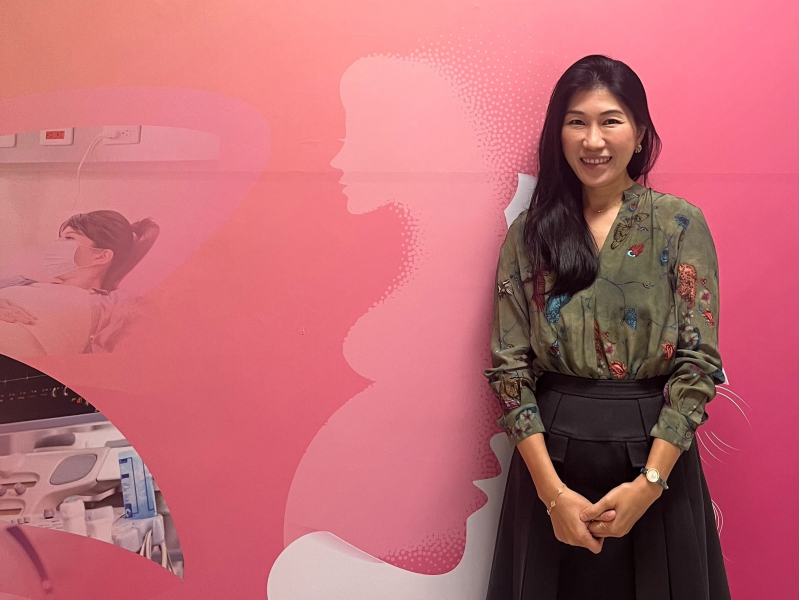
The study led by Professor Queenie Li Lingjun finds that the number of infertility cases among women of advanced maternal age has steadily increased globally over the past 33 years, underscoring the importance of timely fertility assessment, early fertility planning, and strengthened reproductive health services.
A research team from the Department of Obstetrics and Gynaecology, School of Clinical Medicine, LKS Faculty of Medicine, the University of Hong Kong (HKUMed), has revealed that the number of women aged 35 to 49 worldwide affected by infertility is expected to rise from 53.6 million in 2023 to 79.64 million in 2036, representing an increase of approximately 50%. As socioeconomic transformation continues and delayed childbearing becomes increasingly common, the burden of infertility is gradually shifting towards more developed economies, with East Asia bearing the highest burden globally. The findings provide important scientific evidence for assessing the burden of infertility, formulating reproductive health policies and optimising resource allocation in Hong Kong and worldwide. The study also underscores the importance of earlier intervention, including timely fertility assessments and early treatment of reproductive disorders. The findings were published in the international medical journal The Lancet Obstetrics, Gynaecology, & Women's Health. [link to the publication]
East Asia faces highest global Infertility burden
Using data from the Global Burden of Disease (GBD) 2023, the HKUMed research team conducted an analysis of infertility among women aged 35 to 49 across 204 countries and territories from 1990 to 2023. The study compared the prevalence of infertility and its associated health impacts across various regions, assessed country-level infertility improvements and projected future trends.
The study found that approximately 53.6 million women aged 35 to 49 worldwide were affected by infertility in 2023, equivalent to an average of about 6,900 cases per 100,000 women in the same age group. Over the past 33 years, the number of infertility cases among women of advanced maternal age has steadily increased globally. Although the relative disparity in infertility burden between high- and low-socio-demographic index (SDI) regions narrowed by 23.1% between 1990 and 2023, the burden has progressively shifted from less developed regions to more developed economies, driven by socioeconomic changes and delayed childbearing. Among the 21 GBD regions, East Asia recorded the highest burden of infertility among women of advanced maternal age, with an age-standardised prevalence rate of 12,030 cases per 100,000 population in 2023, which was substantially higher than the global average.
Urging Hong Kong to adopt a new approach to infertility: From treatment to prevention
Hong Kong is part of East Asia and is classified as a high-SDI region. As delayed marriage and childbearing become increasingly common in Hong Kong, the average maternal age is among the highest globally. This suggests an increasing demand for fertility assessment, counselling and assisted reproductive services.
The study noted that reproductive health planning in Hong Kong has focused on treatment after diagnosis, with less emphasis on early interventions, such as fertility education, risk identification, timely assessment and preventive measures. The research team suggests that highly developed settings such as Hong Kong should move beyond a treatment-based model and adopt a more proactive and forward-looking strategy. This should include strengthening fertility education, promoting early reproductive planning, and facilitating early identification and intervention for reproductive health issues, with appropriate support provided at various stages of women's lives. The study also offers a global benchmark for Hong Kong to assess the local reproductive health burden and service coverage, and to identify areas for policy improvement.
Professor Queenie Li Lingjun, Associate Professor in the Department of Obstetrics and Gynaecology, School of Clinical Medicine, HKUMed, stated, ‘Infertility at advanced maternal age is not just a clinical issue. It is closely linked to family well-being, reproductive autonomy, workforce planning and long-term social development. The challenges posed by infertility are attracting increasing attention in Hong Kong as a result of delayed childbearing and changing family structures. Our research provides international benchmarks that can inform the allocation of reproductive health resources in Hong Kong, enabling policymakers to assess whether existing services are sufficiently accessible, timely and equitable, particularly for women who may delay seeking care due to financial constraints, limited awareness, or competing work and family responsibilities.’
Professor Li added that the findings support the adoption of a broader life-course approach to reproductive health, including fertility awareness, prevention and early treatment of reproductive disorders, timely referral mechanisms, equitable access to fertility services, and policies that better support women and families in making informed fertility planning and choices.
Call for early intervention and strengthened fertility education
The team projected that if the current trends continue, the number of global infertility cases among women aged 35 to 49 could increase by almost 50%, reaching approximately 79.64 million by 2036. The burden on health and impact on quality of life created by this health challenge are also expected to rise correspondingly. The findings indicate that infertility among women of advanced maternal age will become a major global public health challenge in the years ahead, underscoring the importance of timely fertility assessment, early fertility planning and strengthened reproductive health services.
‘This projection is a scenario-based extrapolation rather than a precise forecast,’ said Professor Li. ‘Nevertheless, the findings clearly demonstrate that infertility among women of advanced maternal age is a growing and continuing concern that warrants serious societal attention. It is essential that we adopt earlier and more targeted public health measures to address the reproductive health consequences of delayed childbearing.’
About the research team
The study was co-led by Professor Queenie Li Lingjun, Associate Professor in the Department of Obstetrics and Gynaecology, School of Clinical Medicine, HKUMed; and Dr Zhou Niya from the Chongqing Centre for Women and Children's Health. The first author is Dr Du Yuanyuan.
Acknowledgements
This research was supported by the National Natural Science Foundation of China and the General Project of Chongqing Municipal Science and Health Joint Medical Research. The research team also acknowledges the support of the Institute for Health Metrics and Evaluation at the University of Washington.
Media enquiries
Please contact LKS Faculty of Medicine of The University of Hong Kong by email (medmedia@hku.hk).
 Facebook
  HKU IOS App
  HKU Android App
  Social Media and Apps